By Jim Garamone
American Forces Press Service
WASHINGTON, March 25, 2011 - American service members in Japan continue to help the Japanese people recover from the catastrophic March 11 earthquake and tsunami.
At the same time, many family members have taken advantage of the voluntary authorized departure process.
Japanese authorities say that more than 10,000 people are known dead from the twin disasters and another 17,000 are still missing. More than 250,000 are living in evacuation shelters.
The nuclear emergency at the Dai-Ichi power plant continues, and Japanese authorities today asked those living between 20 and 30 kilometers from the plant -- about 12 to 20 miles -- to move.
American service members based in Japan were among the first international personnel to provide aid.
As of March 24, U.S. service members have delivered 1,707,815 gallons of water, 172 tons of food, 10 tons of medical supplies and 34 tons of other relief supplies. DOD personnel are working with Japanese emergency responders to search for bodies, clear airports and roads and deliver humanitarian supplies.
American helicopters have hop-scotched the area delivering supplies, transporting survivors or bringing in personnel.
Sixteen U.S. ships, including the aircraft carrier USS Ronald Reagan, are deployed in support of operations. Marines from the 31st Marine Expeditionary Unit and 3rd Marine Expeditionary Force are involved with the relief effort. Airmen from Misawa, and Kadena air bases also are involved at many levels.
A total of 4,744 U.S. family members have returned to the United States via the voluntary authorized departure program. About 8,000 American family members are still in Japan awaiting departure.
Service members and their families have had concerns about possible contamination of food and water in Japan, and U.S. Forces Japan has enhanced the measures the command takes to ensure the safety of food and water supplies.
The food and water on U.S. military installations are safe and in accordance with U.S. Food and Drug Administration standards, according to a release on the command's website.
The command will continue to test water supplies and will increase the number of tests as an added precaution, the release added.
"The safety and security of our service members and their families are our top priority," the release said. "We take extreme care to ensure our personnel are protected and will continue to monitor the situation."

Friday, March 25, 2011


Monday, March 14, 2011
Fallen Hero, Sgt. Jason M. Weaver, Welcomed Home
Story and photos by Army Sgt. 1st Class C. L. Beal
LOS ALAMITOS, Calif. — Service Members, Family, police, firemen, friends, and community members welcomed home Fallen Hero, Sgt. Jason M. Weaver, at Joint Forces Training Base Los Alamitos today.
Weaver, 22, of Anaheim, California died March 3rd, 2011 in Kandahar Province, Afghanistan of wounds suffered when insurgents attacked his unit using an improvised explosive device. He was assigned to the 504th Military Police Battalion, 42nd Military Police Brigade, Joint Base Lewis-McChord, Wash.
 |
Patriot Riders of Southern Calif. precede the funeral procession of Fallen Hero, Sgt. Jason M. Weaver, at Joint Forces Training Base Los Alamitos. |
Welcome Home 326th Financial Management Center!!
Story and Photos by Sgt. 1st Class C. L. Beal

 |
Maj. Gen. William D. Frink Jr., Commanding General of the 79th Sustainment Support Command, speaks to Soldiers and Family members of the 326th Financial Management Center during a Welcome Home Warrior Citizen ceremony at the General George S. Patton U.S. Army Reserve Center in Bell, Calif., March 13. |
Soldiers of the 326th Financial Management Center were honored in front of family, friends and employers during a Welcome Home Warrior Citizen ceremony at the General George S. Patton U.S. Army Reserve Center in Bell, Calif., March 13.
The Soldiers of the 326th Financial Management Center recently returned from a year-long deployment in support of Operations in Iraqi, Kuwait, and Afghanistan. During their deployment, they provided technical oversight of all theater financial management operations, established theater policies and enforced regulations and guidelines.
The Welcome Home Warrior-Citizen ceremony is a Soldier-recognition program that was established in December 2004 to thank Reserve Soldiers and their Families for their sacrifices in support of operations in Iraq and Afghanistan. The program was signed into law by President George W. Bush to ensure that Reserve Soldiers receive tangible recognition for their combat and non-combat service.
“The Welcome Home Warrior Citizen Ceremony gives us an opportunity to bring all the Soldiers and Family members back together and thank them both for their service and sacrifices,” said Col. Arthur Turnier, Director of the 326th FMC during its deployment.
“It also helps soldiers know that in the Army Reserve they are part of a larger family than they might think. It lets a new soldier know that they are not just a finance specialist by themselves – they are part of a family that will take care of and appreciate them,” continued Turnier.
This recognition is invaluable said Command Sgt. Maj. Gerald Capps, Command Sergeant Major of the 311th Expeditionary Sustainment Command.
“The problem we face as Reserve Soldiers is that we usually don’t get recognized by the local communities when we come back from deployments. These events give our soldiers and families that recognition and show them thanks for their sacrifices,” said Capps.
Maj. Gen. William D. Frink Jr., Commanding General of the 79th Sustainment Support Command, and guest speaker of the event, said it was an honor to welcome home the Warrior Citizens and recognize them for the successful mission they carried out in answer to their nation’s call.
“The 326th truly brought the brainpower and skills needed, when our country needed it,” said Frink. “We are all honored and blessed that the men and women standing before us today volunteered to serve our nation.”
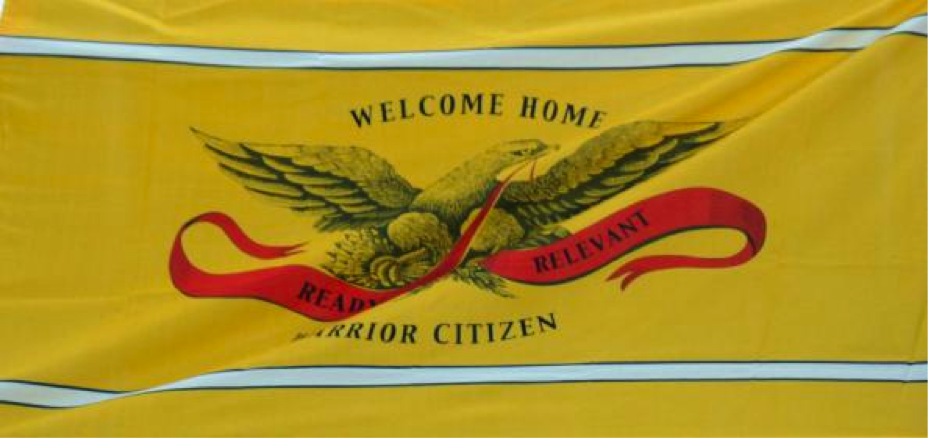
During the ceremony, Frink individually thanked and presented the Soldiers and their Families with tokens of appreciation. They include a U.S. Flag in a wooden case with their name engraved on the front, a commemorative Warrior Citizen coin, a lapel pin set for the Soldier and Family members, and a Warrior Citizen welcome home flag.
“These are good and positive things, and I think they mean a lot to the soldiers and families who receive them,” said Capps. “It’s much better than in the old days when they would just give us a pen that didn’t work.”
Staff Sgt. Roberto Cuellar, a financial management analyst in the 326th FMC, said he wished they would have had these kinds of events the first time he deployed.
“I think they are a big help in making Soldiers feel appreciated for what they have done,” said Cuellar. “The Welcome Home Warrior Citizen Events really do make a difference.”
Friday, March 11, 2011
ADPAAS For all affected Soldiers/Commands
There are now ADPAAS events called JAPAN EARTHQUAKE 2011 and HAWAII TSUNAMI 2011. Units will be required to use ADPAAS to account for personnel within the affected areas.
The assessment module has been activated to record needs of affected personnel. We recommend those affected to fill out a needs assessment survey in ADPAAS. This survey will be used by Army Reserve Family Program case managers to track and assist Army personnel and their family members who are affected by recent events.
Note: We expect to create more events as each affected area related to the Earthquake in Japan is identified. When this occurs in the absence of official guidance, units should initiate Disaster accountability and assessment via ADPAAS.
- If you receive any calls please assist callers by accounting for them under the "JAPAN EARTHQUAKE 2011” & “HAWAII TSUNAMI 2011” events in ADPAAS.
- If any personnel require evacuation assistance, inform them to contact their unit Commander and fill out a needs assessment survey in ADPAAS.
- Personnel who need assistance should complete a needs assessment survey in ADPAAS and contact the Army Reserve 24-hour Call Center at 866-345-8248. The call center can also assist personnel with individual accountability.
- As a reminder to ensure we are consistent in properly accounting for our personnel, here is the standard we should be using for our current accounting statuses:
- CURRENT LOCATION - Individual is currently in place (Hawaii, Japan)
- DISPLACED LOCATION – Individual evacuated their home location en-route to their safe haven location
- OTHER - As appropriate, especially those no longer assigned in Hawaii & Japan
Affected Personnel who need assistance should complete a needs assessment survey in ADPAAS and contact the Army Reserve 24-hour Call Center at 1-866-345-8248. The call center can also assist personnel with individual accountability.
Crisis in Japan: Tsunami Update from 79SSC Command
By Capt. Kalen Arreola
79SSC PAO
As you may have already discovered, a large earthquake hit off Japan's coast during the early hours of the morning, killing hundreds living there. News reports have said this is the largest earthquake in Japan's recorded history.
The Army Reserve is doing its part to ensure its service members are safe and accounted for during this tragic event.
Maj. Gen. William D. Frink, Jr., commander of the 79th Sustainment Support Command, has asked that we use all means necessary to communicate updates to our troops and Families as they are received -- to include all social media platforms.
"There is no report of loss of life for our Soldiers or Families at this time," said Frink, in an email message sent this morning around 9 a.m. PDT. "We are implementing three ongoing lines of effort: assessing the impact and accounting for our Soldiers and Family Members; taking the necessary precaution of monitoring possible tsunami impact as it approaches the West Coast; and preparing to support recovery efforts and alert units as needed."
Frink said communication with Family members in the Pacific region has proven to be a challenge. Text messages are getting through, but phone lines have been busy. Families and troops are encouraged to communicate with the command through any means available, including Facebook, Twitter and this blog post.
"We understand this is a challenging time for our troops and their Families, but we will continue to be proactive in our communications efforts as information comes available to us," said Frink. "Our thoughts and prayers are with the citizens of Japan and all those affected by this disaster."
For Soldiers needing assistance immediately, the Army Reserve's Fort Family program has sent this message:
As severe weather approaches Hawaii and California the Fort Family Outreach and Support Center is standing by to assist Reservists and their Families. Please know that the Fort Family Outreach and Support Center is open 24 hours a day, 7 days a week to assist you when you need us, no matter what the situation. Please take a moment to write down our contact information so that you will have it when needed. Please contact the Fort Family Outreach and Support Center at 1(866) 345-8248 or by email at help@fortfamily.org.
For 79SSC-related news and information or to send messages to the command, visit: www.twitter.com/79ssc and www.facebook.com/79ssc.
Media requesting interviews, contact Capt. Kalen Arreola at kalen.arreola@us.army.mil or 858-525-2498.
Media requesting interviews, contact Capt. Kalen Arreola at kalen.arreola@us.army.mil or 858-525-2498.
Thursday, February 24, 2011
Leaders Take Note: Updated FM 7-0, Manual Goes Hi-Tech
By Capt. Kalen Arreola
As we head into the eighth year since the start of Operation Iraqi Freedom I in 2003, during Army Transition, much of our operations have adapted to our ongoing mission requirements, so it makes sense that our policies and procedures are evolving as well.
The Army’s Combined Arms Center-Training’s Collective Training Directorate has released the newest version of Field Manual 7-0: Training Units and Developing Leaders for Full Spectrum Operations (FSOs) – and has taken the document into the technological age.
The new manual is designed to support the recently updated FM 3-0: Operations field manual, and is a shorter, 38-page document that is now supplemented by a new online portal. Not only can you read through the paper copy of the field manual, you can log into Army Knowledge Online and access the Army Training Network portal to access videos, documents, best practices, and other valuable resources.
Some of the most significant changes in FM 7-0 include replacing Core Mission Essential Task Lists and Directed Mission Essential Task Lists with FSO METLs. The new manual also emphasizes the need for commanders to collaborate on overseeing unit training, as well as explaining the Training Management Process as an intellectual process that should focus on the mission command concept, versus a step-by-step process to training that exists today.
The online portal also enhances the ability for Soldiers to adapt to changing training requirements and future field manual releases. To find out more about the new manual, visit: http://www.army.mil/standto/archive/2011/02/23/?s_cid=email.
Mothers carry on after children gave all
National organization brings the women together,
but they don’t sit around feeling sorry for each other, says member
By Sgt. Michael Connors
79th Sustainment Support Command
They are the women boldly wearing white from head to toe whom you may see gathered at a patriotic ceremony, or at a VA hospital volunteering. The garb of American Gold Star Mothers, as opposed to traditional mourning black, conveys more than personal loss: The white outfit symbolizes honor and glory of a son or daughter who has made the ultimate sacrifice for country.
American Gold Star Mothers—a national, nondenominational, nonpolitical and nonprofit organization—was organized in 1928 and incorporated in 1929 in Washington, D.C. It finds its origin, however, in a group of Gold Star Mothers formed in Washington, D.C., during World War I. In 1984, it was granted a Congressional charter. Just as relevant today as it has been since its inception, American Gold Star Mothers is both a support group for mothers who have lost children in the military and a service organization that helps veterans.
Nancy Soltes, a Mission Viejo, Calif., resident and member of the Saddleback Valley chapter, said local American Gold Star Mothers are involved in numerous volunteer activities. These include working at the VA hospital and the Camp Pendleton hospital, sending fleece blankets and cooling vests to deployed service members, and serving as guardians on honor flights to Washington, D.C., for World War II veterans visiting the National World War II Memorial.
“I would like it highlighted that we’re not a group of women who are sitting around feeling sorry for ourselves,” said Soltes, who lost her son, Charles Soltes Jr., in 2004 when he was serving in Iraq as a civil affairs officer. “Whether we’re down at Camp Pendleton … whether it’s the fundraiser for the cooling vest project, whether it’s making blankets, most of the moms are involved, and their involvement is specifically directed at the military and veterans.”
Nationwide, there are fewer than 3,000 members in the organization. Soltes acknowledged that many mothers are reluctant to join because of the painful emotional circumstances, but she said involvement helps mothers process and deal with their loss.
“Making that first meeting is one of the hardest things to do,” said Soltes, “and the whole first meeting is tough … when you tell people your story. Then you look around and you realize that everyone else in the room has been there.”
After the initial step of joining the organization “there’s a distinct benefit,” Soltes said. She spoke about one mother who only recently joined after 10 years of struggling with the loss of her son. The mother hadn’t known about the existence of the organization until recently.
“She feels so much better since she joined our group,” said Soltes. “She’s now become involved, she’s a very active volunteer at the Long Beach VA, she’s very active in our whole organization.”
Soltes also pointed out that, like the woman who wasn’t aware of American Gold Star Mothers until many years after her son’s death, many others may not know about the organization either. She said it may be that chaplains and casualty affairs officers simply may not know of the organization, and therefore may not refer families to it.
“It sometimes is hard to get the word out,” Soltes said. “We’ve had mothers who’ve gone a year or two before they’ve heard about us, and probably most of them could have used some extra support during that time. When they finally give us a call or come to one of our meetings, they always feel so relieved that there is a group that they can go with, or people that they can talk with who really understand.”
A badge of honor for family members
The word doesn’t always seem to get out about the Gold Star Lapel Pin either, said Soltes, which American Gold Star Mothers proudly wear on their white outfits. There are actually two pins issued by the government, the other being the Next of Kin Lapel Pin. The Gold Star Lapel Pin, which has a purple background, signifies the loss of a service member in combat, while the Next of Kin Lapel Pin, without a purple background, is for noncombat loss, such as a training accident. However, mothers eligible for either pin are welcome to join American Gold Star Mothers, according to the organization’s Web site.
Soltes pointed out that the pins, which have been associated with Gold Star Mothers over the years, are actually for all immediate family members. If not provided through a casualty affairs officer, the Gold Star Lapel Pin may be obtained by submitting DD Form 3. To obtain the Next of Kin Lapel Pin, if not provided, family members must make a request in writing to the National Personnel Records Center, according to the American Gold Star Mothers Web site. The pins have traditionally been worn with civilian attire, but a recent change to Army Regulation 670-1 authorizes wear of the Gold Star Lapel Pin on the army green uniform by soldiers who have lost an immediate family member in combat.
A home for mothers, veterans
In addition to supporting mothers and veterans, American Gold Star Mothers is affiliated with American Gold Star Manor in Long Beach, Calif. It provides government-supported housing for seniors 62 or older, with priority going to American Gold Star Mothers and veterans. The complex has 348 independent-living apartments located in a secure 23-acre, park-like setting. Monthly rent is typically $300 to $400, said Terry Geiling, president of American Gold Star Manor.
“My mantra around here is clean, quiet, safe, and comfortable,” he said. That mantra can be seen borne out at the facility. The grounds are lush and upkeep is meticulous. Residents can maintain their own individual gardens. Amenities include a banquet hall, swimming pool, exercise room, computer center with Internet access, and Internet availability in all apartments. Special attention is paid to keeping residents engaged through activities and outings: coffee and newspapers every morning, computer classes taught by local college students, holiday parties, pancake breakfasts, rummage sales, movie night, bingo night, and even organized trips to outside attractions such as nearby Indian casinos. “This is way beyond a job for me, this is a labor of love,” added Geiling.
The stamp that Geiling has put on American Gold Star Manor over his two years at the helm can be attributed to his wealth of experience. In addition to serving as a Navy officer, he had a career at IBM working in computer technology, which has translated to an emphasis on having the latest resources for residents. The computer lab, computer classes, wireless Internet access in common areas, and Internet connections in all the apartments has been instituted under his leadership.
His experience is also based on living in Hawaii for many years during his time in the Navy. He said that he encourages the Hawaiian concept of “ohana” at the Manor, which could be best translated as residents relating to each other as extended family. To that aim, he facilitates holiday and cultural celebrations in the banquet hall and maintains a tradition of beginning each event by saying hello in a number of languages, a reflection of the diversity among residents.
For Geiling, however, the verdant setting, computers, and family spirit seem to be just the beginning for this man with a vision for the full potential of the community. He has an eye on making the facility “totally green” as he put it.
“My motto is we have to keep the Manor green, but we have to make it green,” he said in regard to two of his focuses—maintaining the landscape and adopting energy efficient technology. He is currently working with the Department of Housing and Urban Development on financing for improvements including solar energy, drought tolerant plantings, and automated sprinklers. “One, we’ll be a model HUD community, and two, we’ll be a model community for the whole area,” he added resolutely.
Geiling’s vision also includes expanding the eligibility for American Gold Star Mothers and veterans by lowering or easing age requirements. He said he is currently working with legislators to do so. He emphasized that many mothers of recently deceased service members are not senior citizens, but he feels they should be eligible for the Manor nonetheless.
Ultimately, Geiling sees the Manor as not only an excellent residential community, but as a hub for veterans groups in the area to gather. The grounds and banquet hall are ideal for meetings, ceremonies and parties. “This has been the best kept secret in town, and I’m trying to turn that around,” he said.
For all Geiling, his staff, and the residents have done at the Manor, perhaps the most appreciated addition is a new mosaic-tiled memorial set off from the main open-grass area. Rising from a pool, columns feature bronze insignia plaques for each branch of service. Water trickles from the top of the columns. At night, accent lights add a glimmer to the water as it makes its way to the bottom.
“I wanted something that was very dignified and subdued,” said Geiling, “but still had a sense of permanence.”
For more information on American Gold Star Mothers, Inv., www.goldstarmoms.com, 202-265-0991, 2128 Leroy Place, NW, Washington, D.C. 20008.
There is currently a waiting list to establish residence at American Gold Star Manor. For more information: 562-426-7651, 3021 N. Gold Star Drive, Long Beach, CA 90810.
Subscribe to:
Posts (Atom)